Hello Everyone,
Here is another post written by Cath, elevating this blog from the usual accounts of what we've eaten and into a bit of history and culture:
It will come as no surprise to you that Italy has more UNESCO world heritage sites than any other country in the world. Sicily alone has seven. Starting with the first indigenous people, the island hosted early Phoenician and Greek settlements and was conquered by the Romans, the Byzantine Empire, the Arab-Muslim world and continental Europe. All these people left something behind and the influence of these many cultures can be seen in the landscape, the food, the dialects, the feast days and traditions. A fellow traveler told us you can see history in every Sicilian face.
Our first introduction to The Valley of the Temples was on the drive through Agrigento to our hotel in Aragona. Imagine a landscape of olive and flowering almond trees and suddenly you round a corner, look up to a ridge and see something that looks like a gigantic sand colored pristinely preserved Parthenon. We were unprepared for such an astonishing sight.
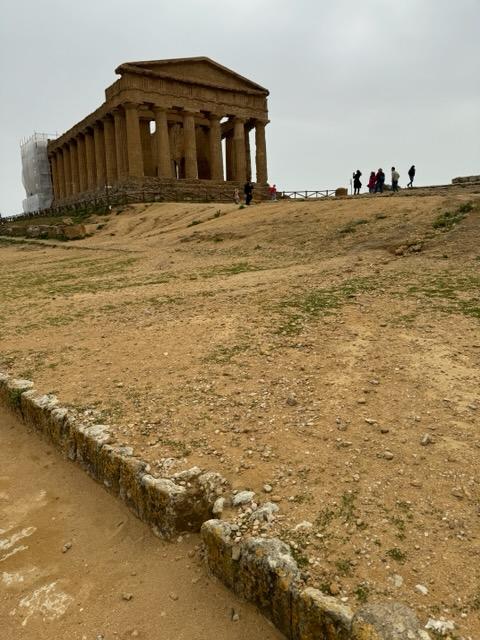
The following day, we met our gracious guide, Alice (pronounced Ah-Lee-Chay), an archeologist, who would lead us through the ruins in The Valley of the Temples. It was a cold and windy day which somehow added to the ghostly beauty of the place. One of the charming things about Alice was that she spoke so knowledgeably about ancient people but also with intimacy — like they were her quirky cousins. With a huge smile on her face she told us she was a big fan of the Carthaginians , who as a side note happened to trash the place in 406 BC, after a siege.
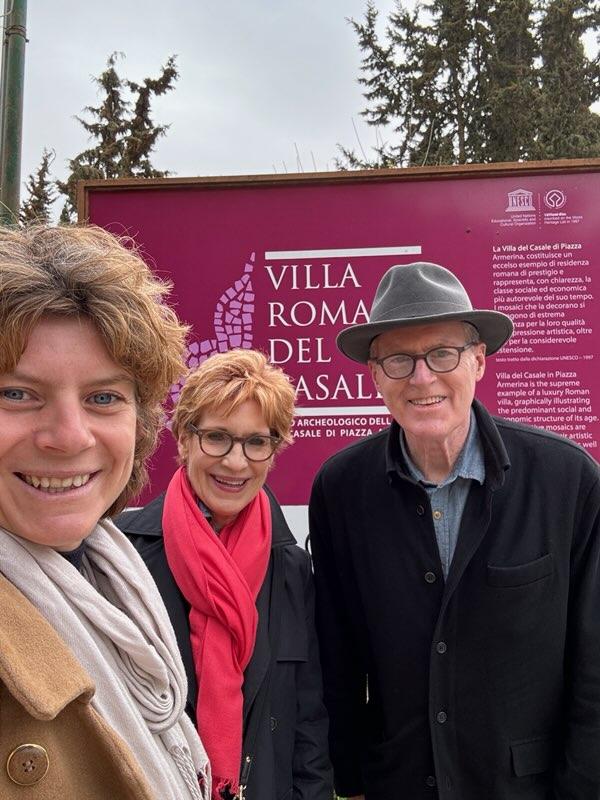 Our guide Alice.
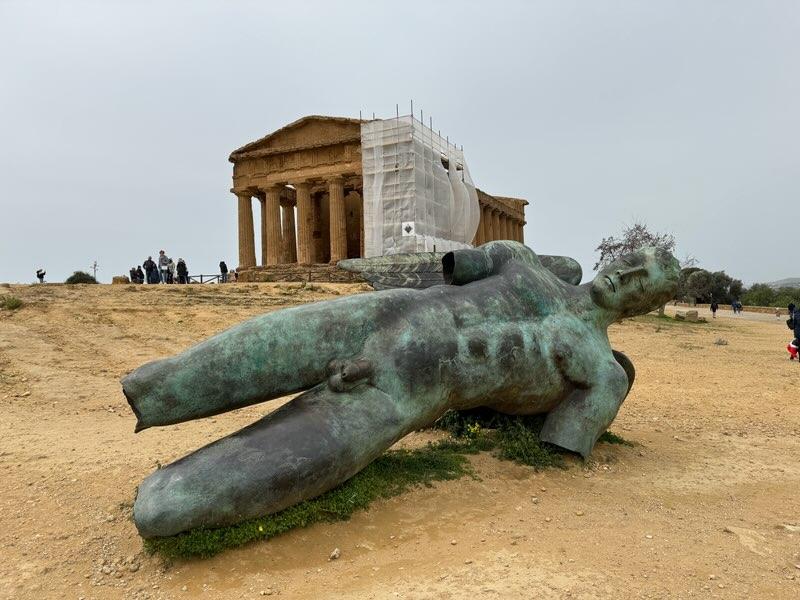
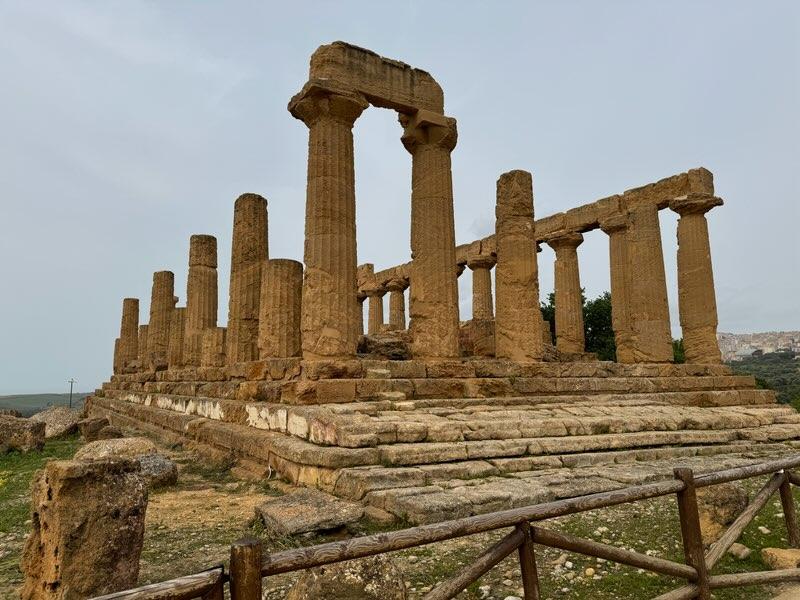 Pillars of the temple
The VOT is one of the most extensive and best-preserved archeological sites of classical Greek civilization, granted UNESCO World Heritage status in 1997. The area corresponds to the remains of the ancient Akragas, the original center of modern Agrigento and along a rocky ridge bordering the southern limit of the town are the great Doric temples dedicated to the gods.
After exploring the site, we took a short walk and repaired to Casa Barbados for another outrageously delicious ( I mean you eventually run out of words to adequately describe the food) “light” lunch (olives, focaccia, pizza, pasta, sautéed local greens, sweets).
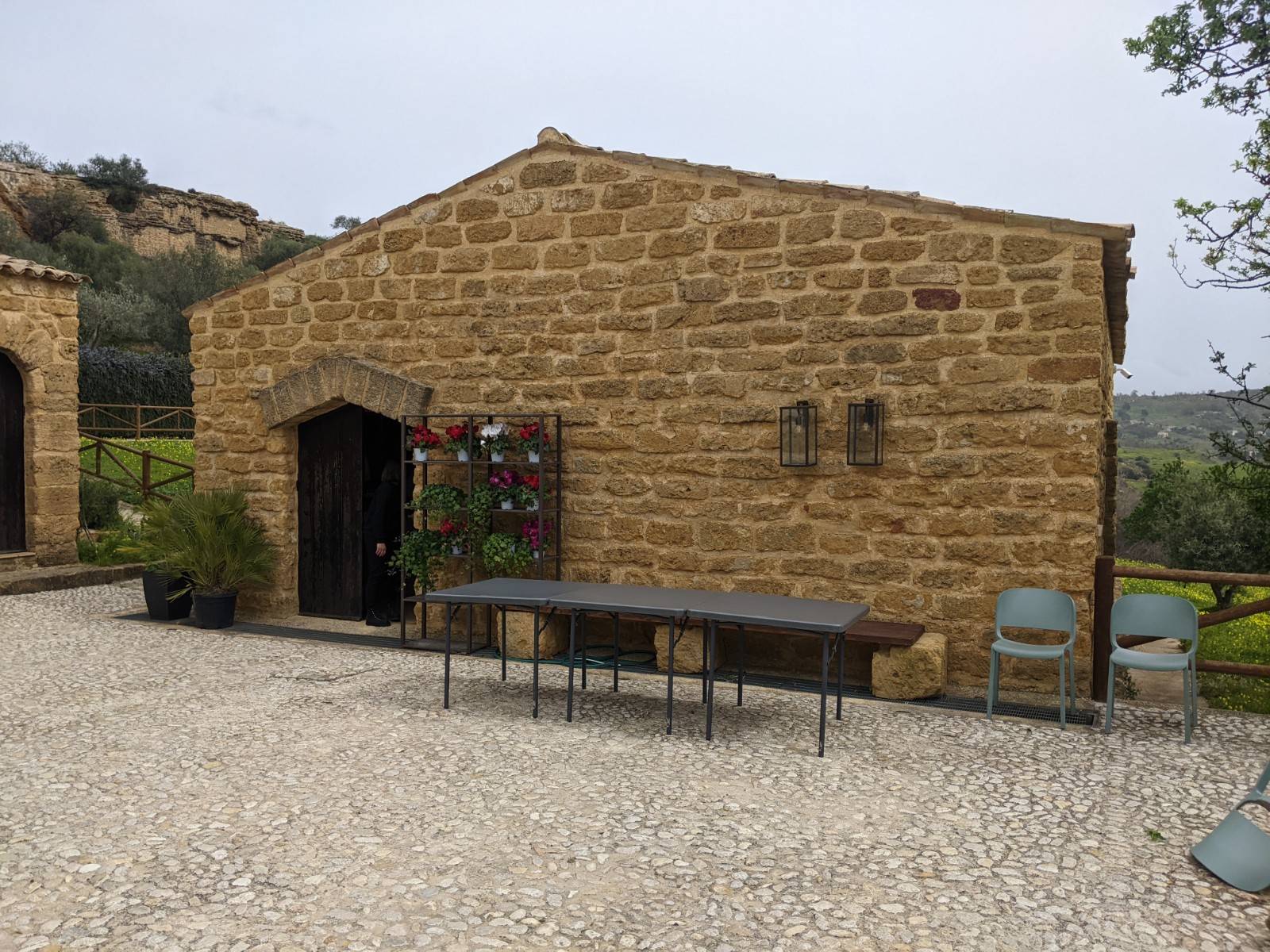 Casa Barbados Restaurant
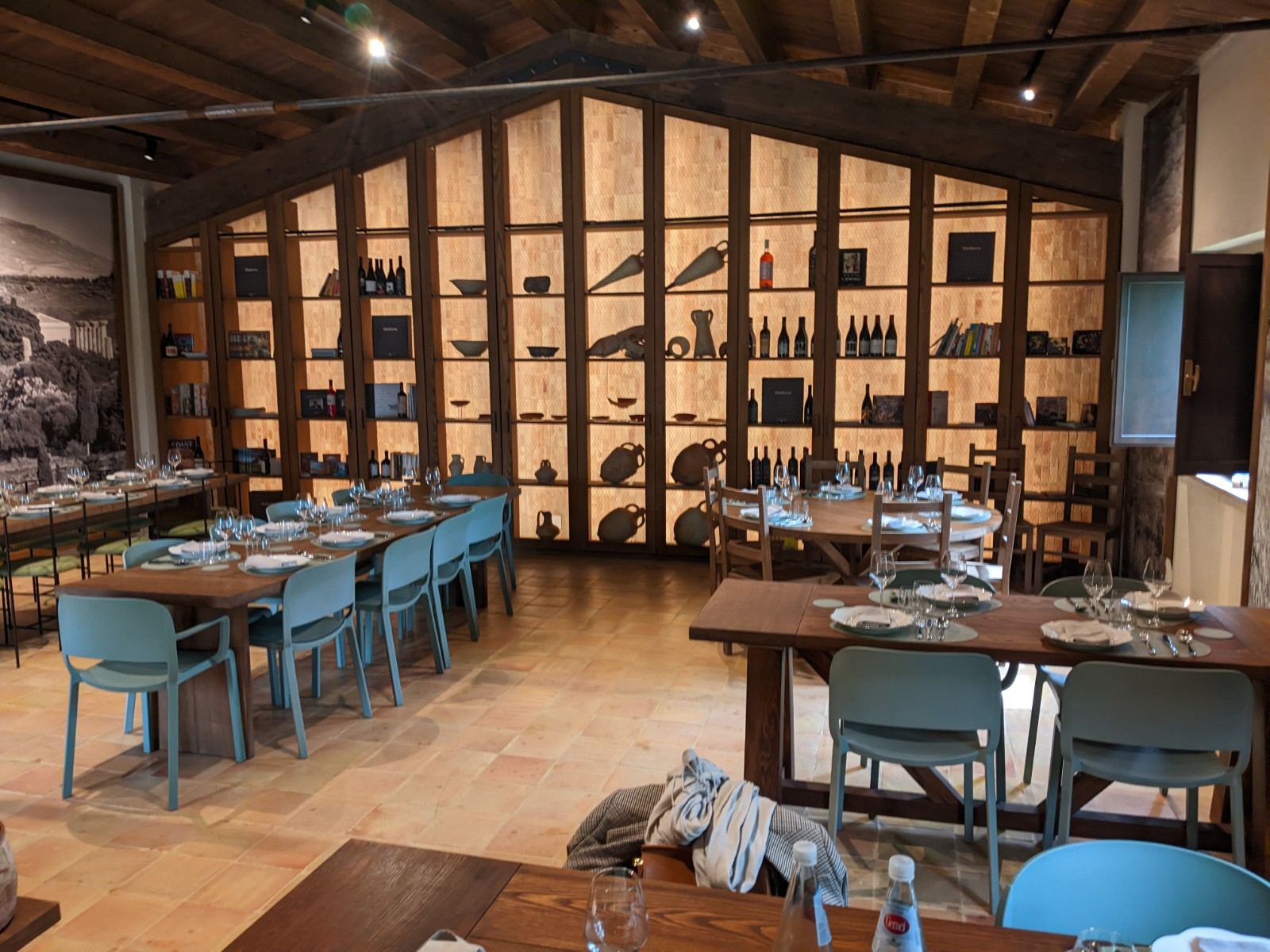 Interior view of Casa Barbados Restaurant
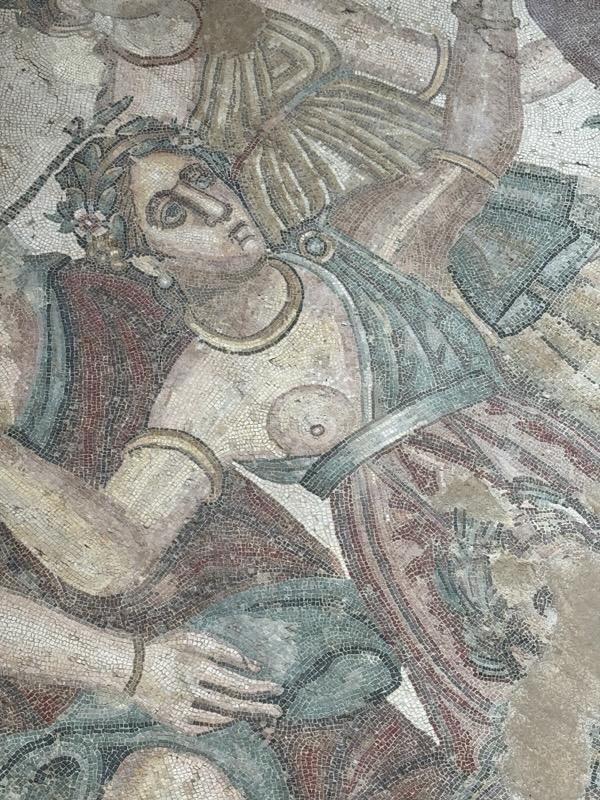
Thus fortified we pressed onto to Villa Romana del Casale. This place, another UNESCO site, contains one of the richest and largest collections of mosaics in the world. The villa and the decorative art within date to the early 4th century AD, and it is thought that this belonged to the master of a large agriculture estate, who needed spaces to host and entertain guests, as well as public places to accommodate local commerce. There was a public bath, and an enormous public latrine. You can contact me directly if you’d like to hear the particulars of the latrine as described by Alice in excruciating detail. Germophobes beware!
It is hard to believe that these gorgeous mosaics were designed and assembled so long ago.
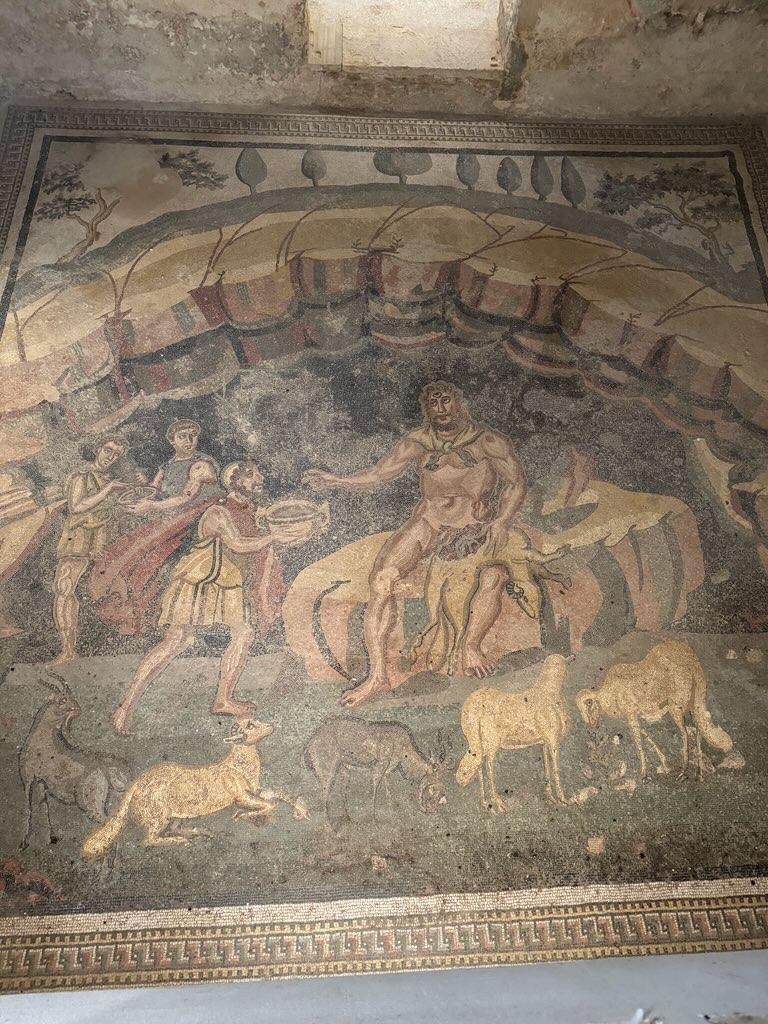
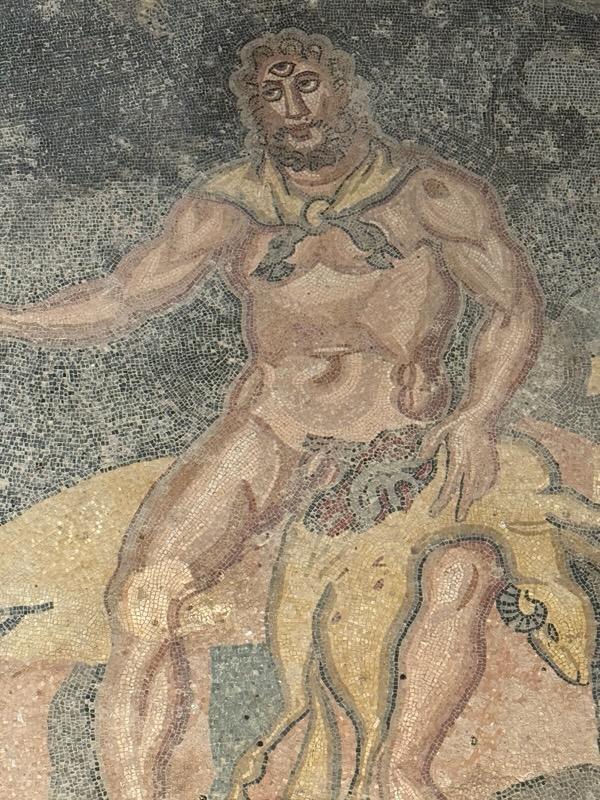 Cyclops Mosaic
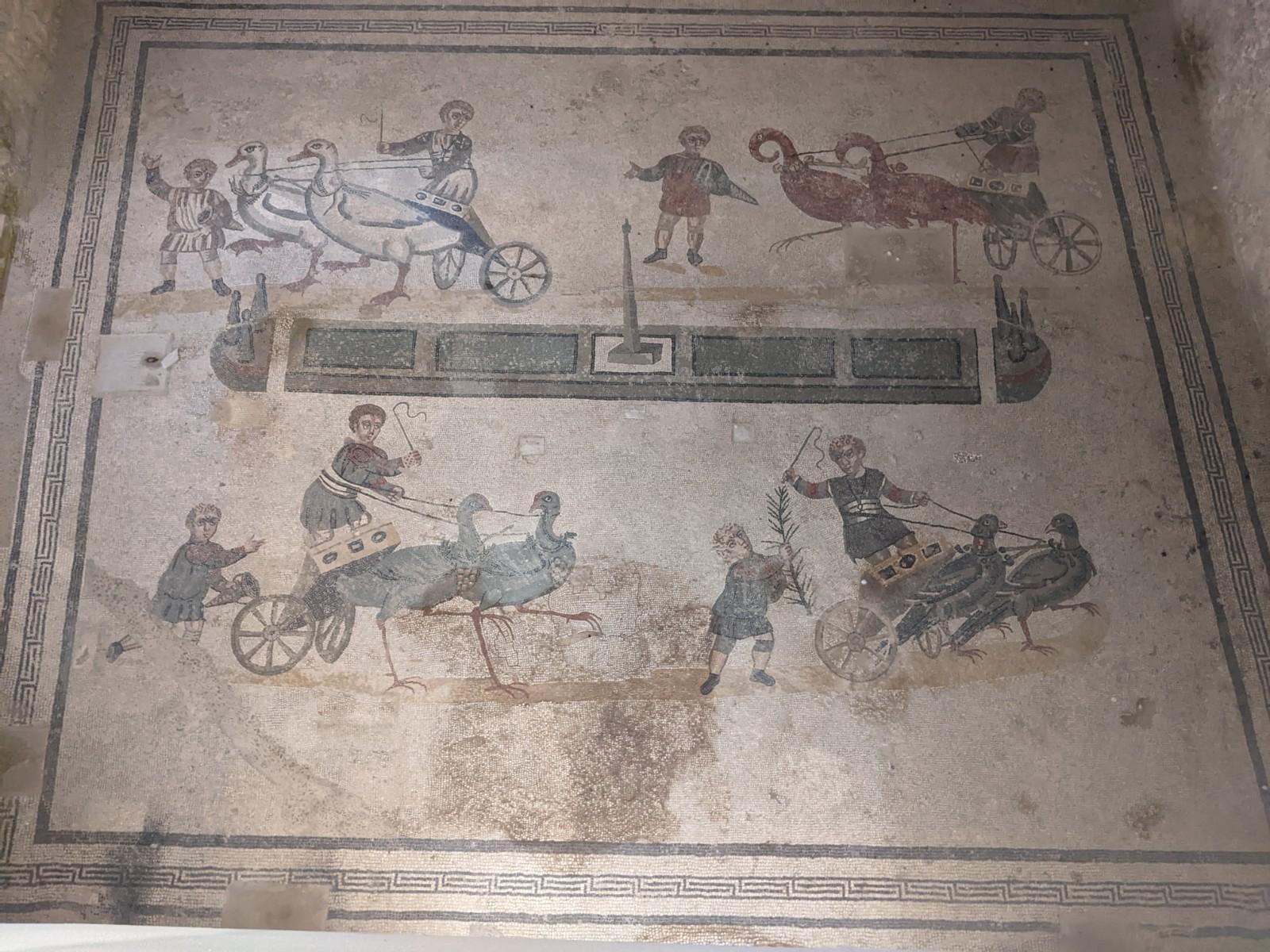 Roman chariot race.
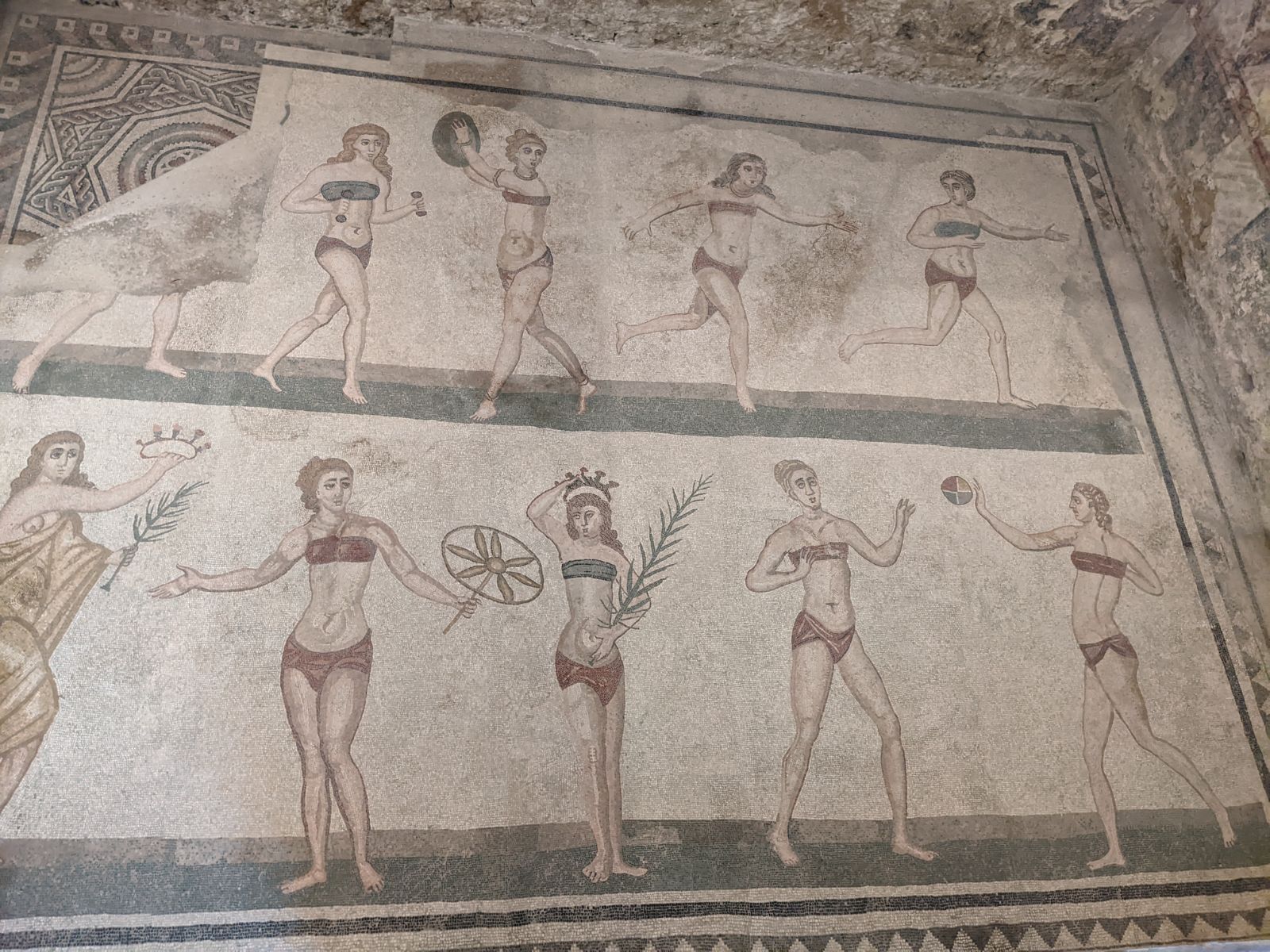 Athletes
The day before we left Aragona, we were able to spend some time in one of the tiny little hilltop villages that are scattered throughout Sicily. Sant' Angelo Muxaro is about an hour's drive from the Valley of the Temples and besides its natural beauty the town is an important Sicilian Iron Age archeological site with remains dating well before the Greek and Phoenicians came to Sicily. In the 18th century, there was a beautiful gold bowl discovered there dating back to 600 BC which is now in the British Museum.
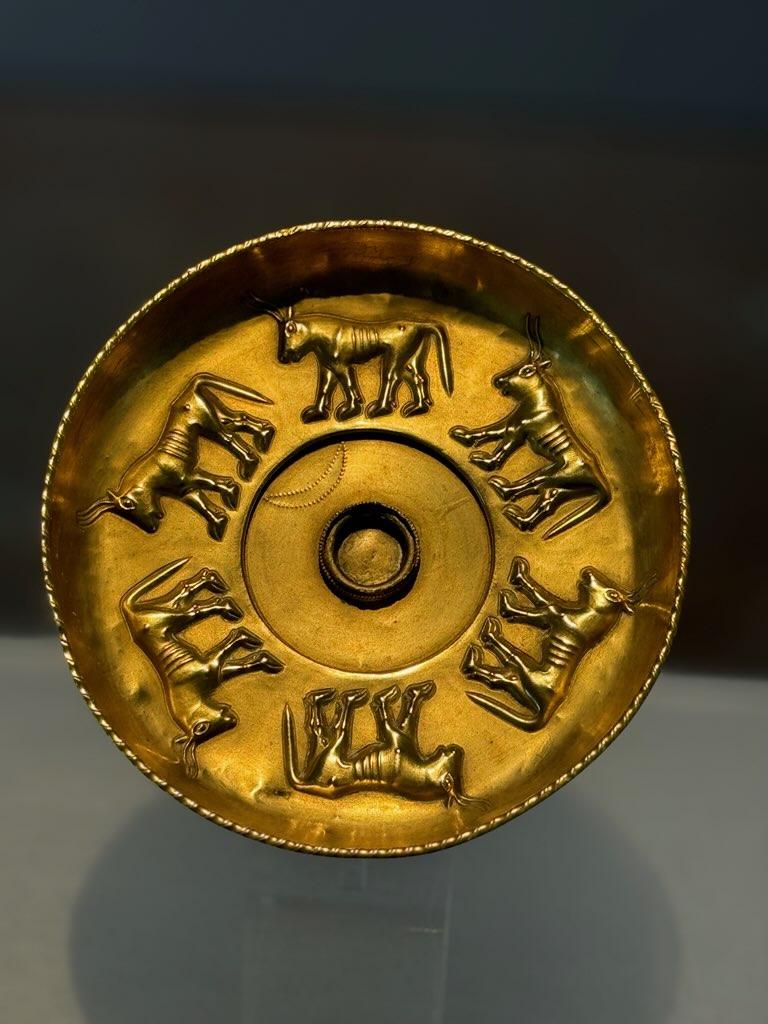
Our guide for the day was Simone, a young philosophy Phd, who had recently returned to village life and his family after the death of his father. You would have been tempted to think that Simone was the mayor of Sant'Angelo because he seemed to know everyone in the town --- there was much waving and hugging. But we actually met the mayor, 28-year-old Angelo, who was nice enough to let us into the closed museum to look at the artifacts on display there.
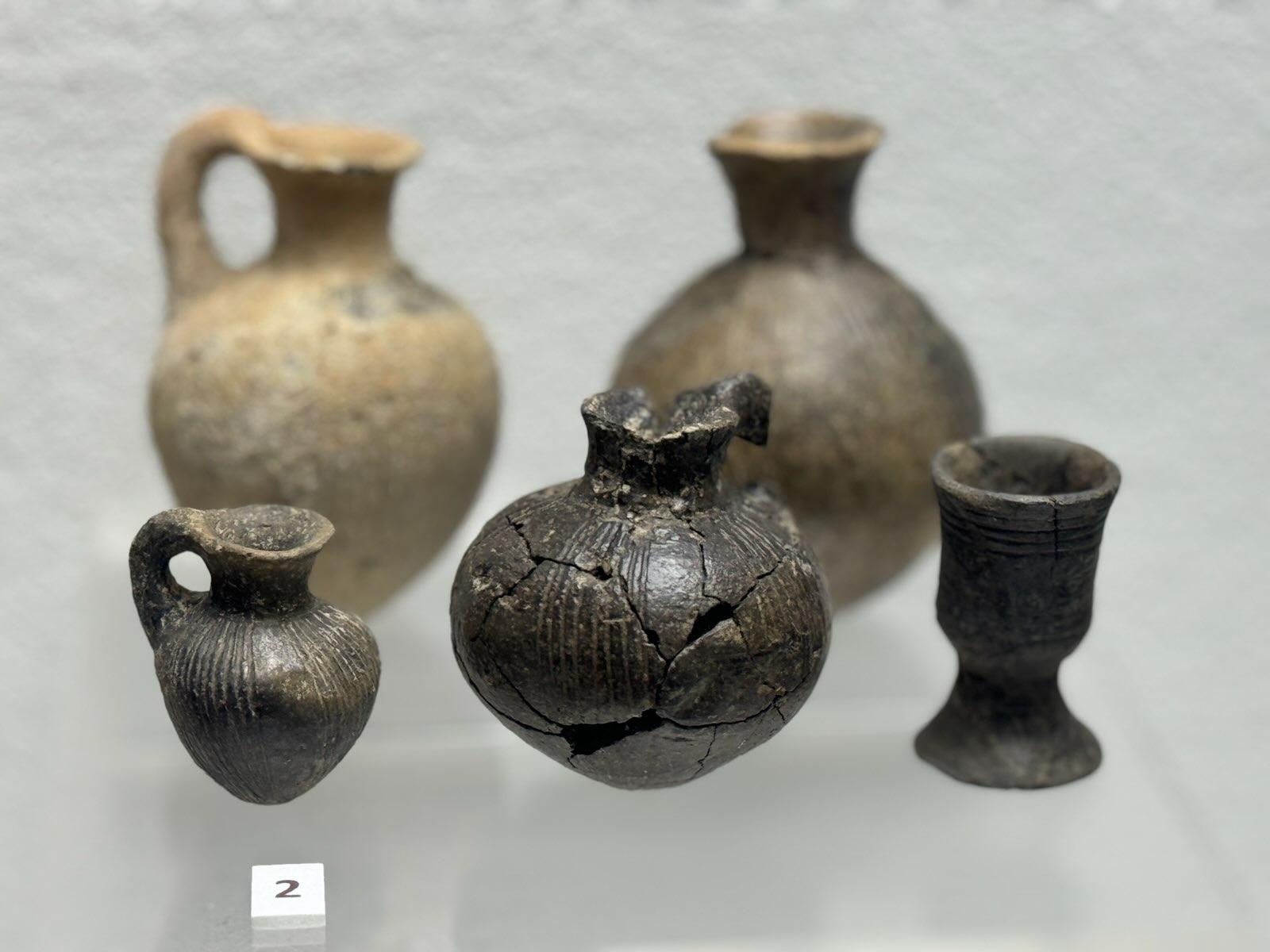
After the museum, we met the elderly parents of a local olive tree farmer who let us sample some olive oil, honey, cheeses, and local dishes. I found out I had been making caponata all wrong (everything should be fried separately, then assembled with tomato and onion). Our hosts spoke no English, but Simone helped translate and food is an international language anyway, so we all got along quite well.
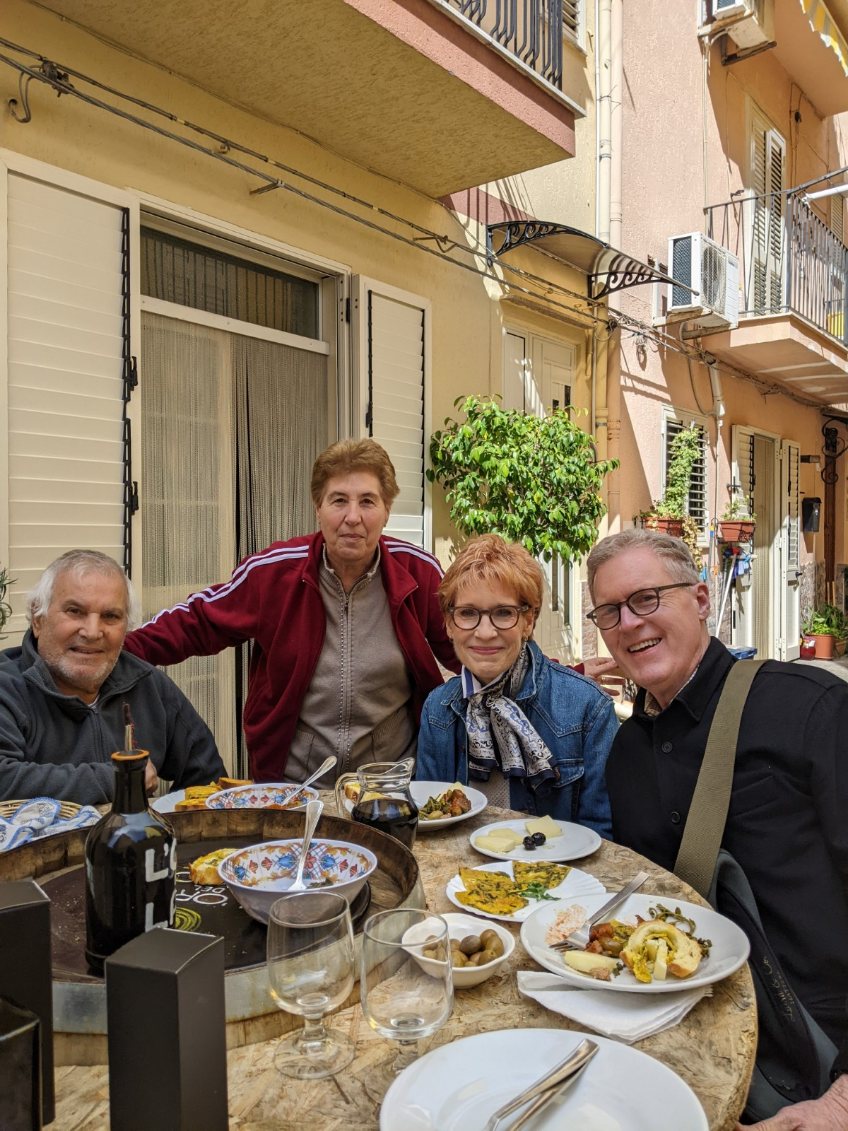
Here are some photos of the town:
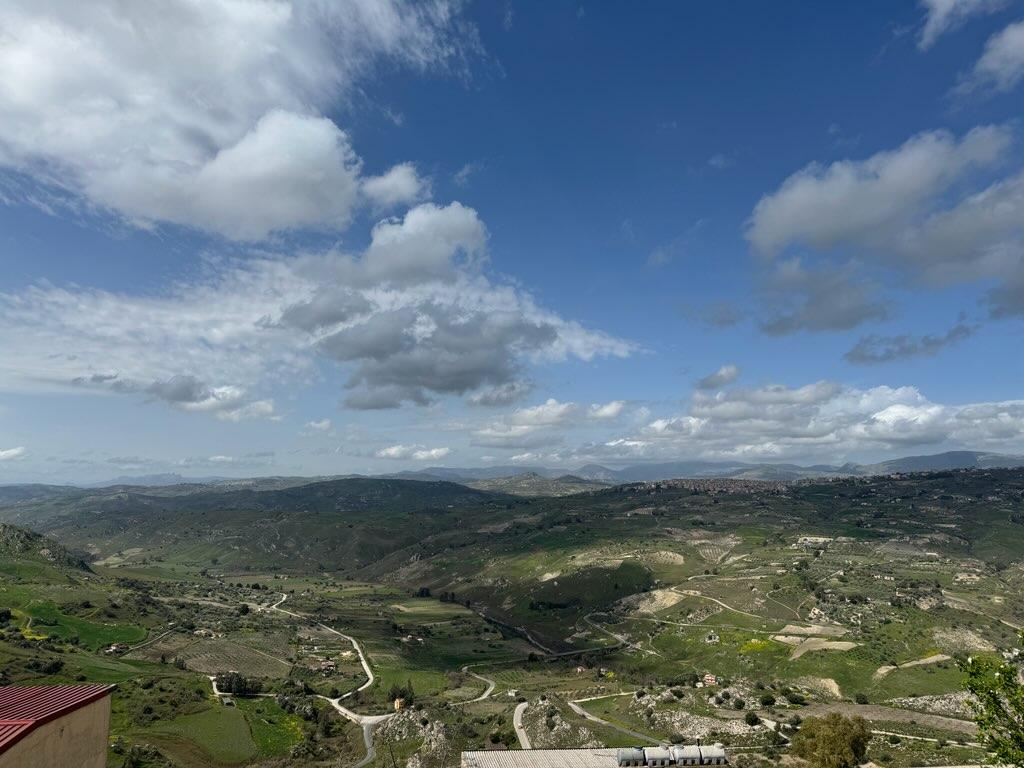 View of the valley below the town
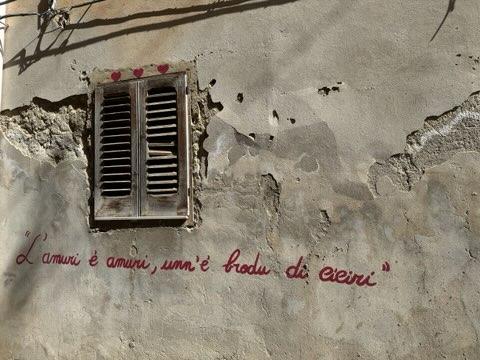
Inscription on wall: L’amuri è amuri unn’è brodu di ciciri, which roughly translates to "Love is love, not a chickpea broth."
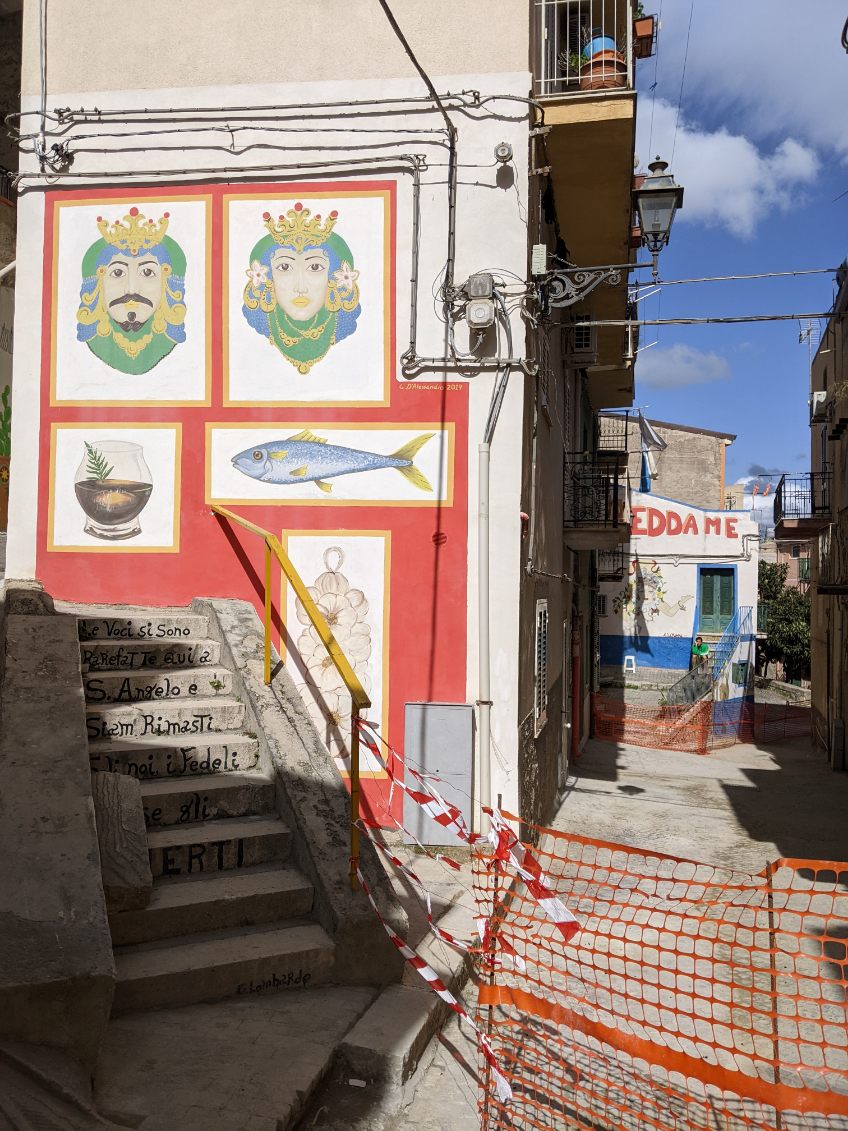 Wall mural
In the afternoon we had lunch prepared by Carmelo and Laura, who run an agriturismo down the hill from the town.
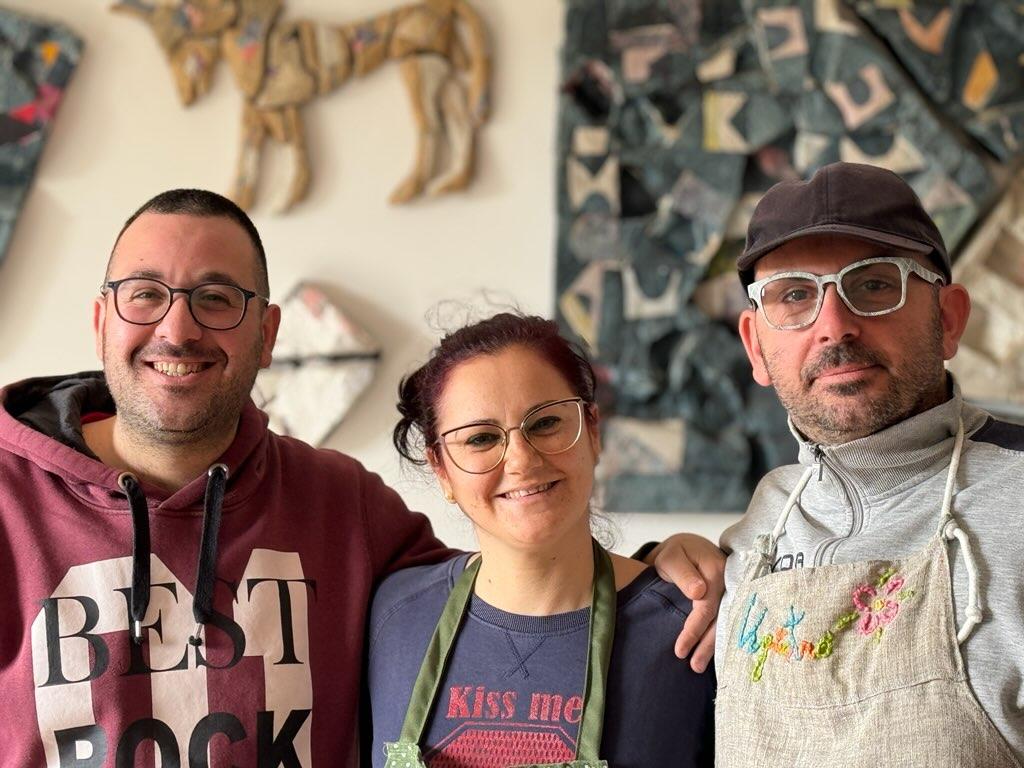 Simone, Carmelo and Laura at the agriturismo
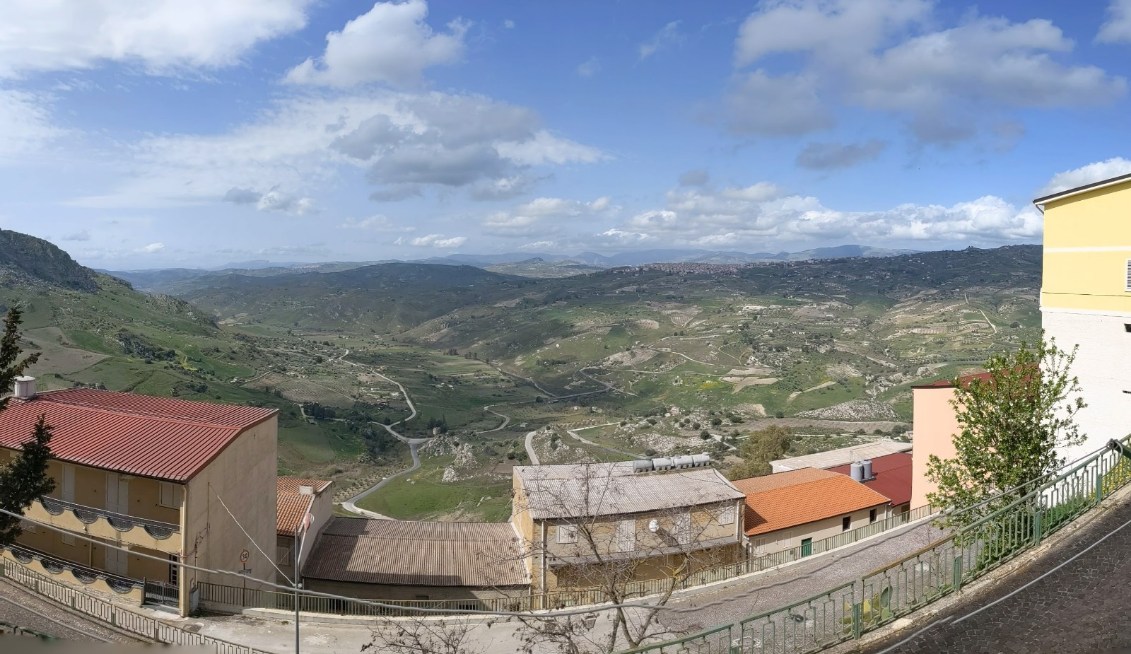 Panorama of Sant Angelo
Bellissimo!
N.B. to commenters: please add your name to the comment so we can know who said what. Thanks
Comments